The horn material from Bighorn Sheep (Ovis canadensis) is anisotropic material with yield surface expanding non-uniformly during plastic hardening and dependent on strain rate. I developed a constitutive model which can accurately predict mechanical response of horn material for anisotropic plastic hardening under quasi-static and dynamic loadings in different principal directions.
Research Background
Horn from Bighorn Sheep has high impact resistance up to 5.5 m/s, which is promising to developing bio-inspired composite material with high toughness. However, how to use FEA method to model this type of anisotropic, strain rate dependent, and hydration sensitive material with high fidelity?
Current Study Limitation
Existing published studies only investigated numerical modeling of horn material using isotropic model without considering strain rate effect, which is far away from truth.
Challenges
There is no existing material model in FEA tools to represent a constitutive model which has anisotropic plastic hardening in three principal directions while coupled with strain rate effect. It is necessary to use User-Subroutine (UMAT) from LS-DYNA to self develop a complicated material model from scratch.
Constitutive Model
The key to handle anisotropic plastic hardening is finding a tensor which can map between initial yield state and the current stress state. Once the exact tensor is determined, it is relatively easy to identify the current yield stress state based on mapping from initial yield surface.
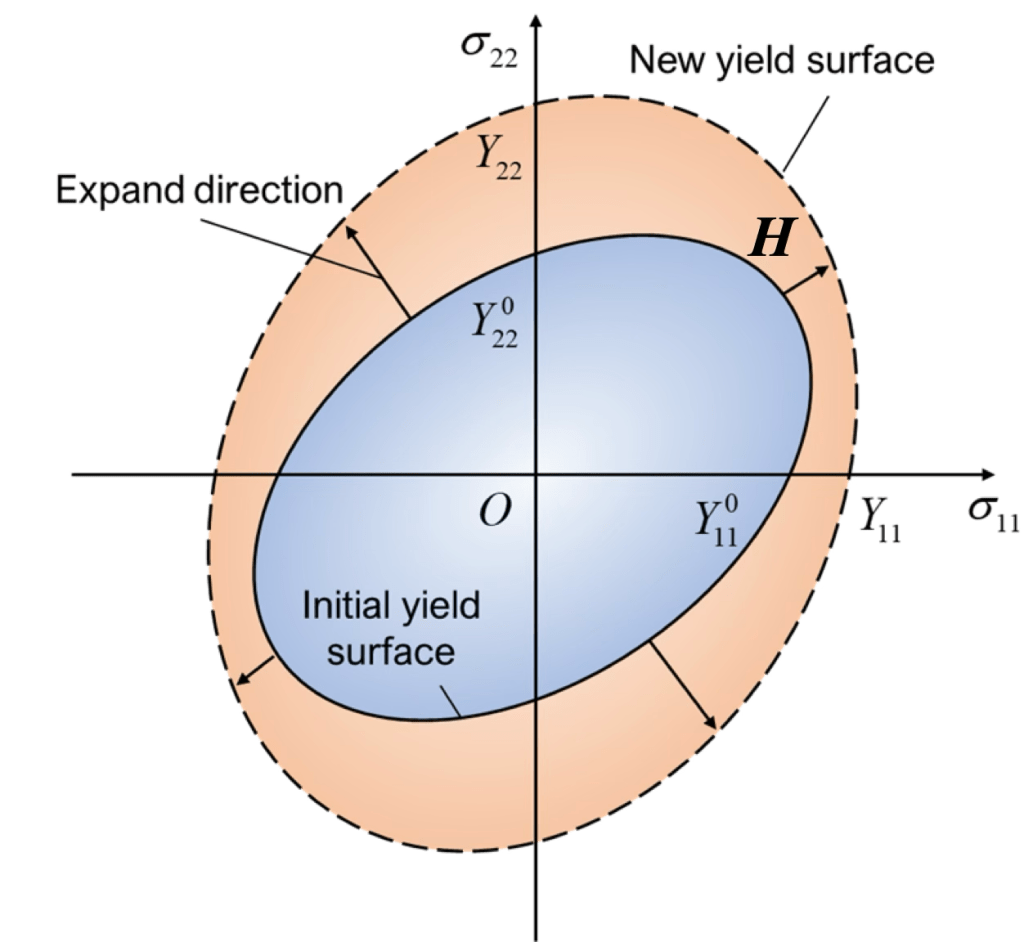
H: Anisotropic hardening tensor which maps initial yield state to the current stress state
H-1: Scale back to initial yield surface
Material characterization
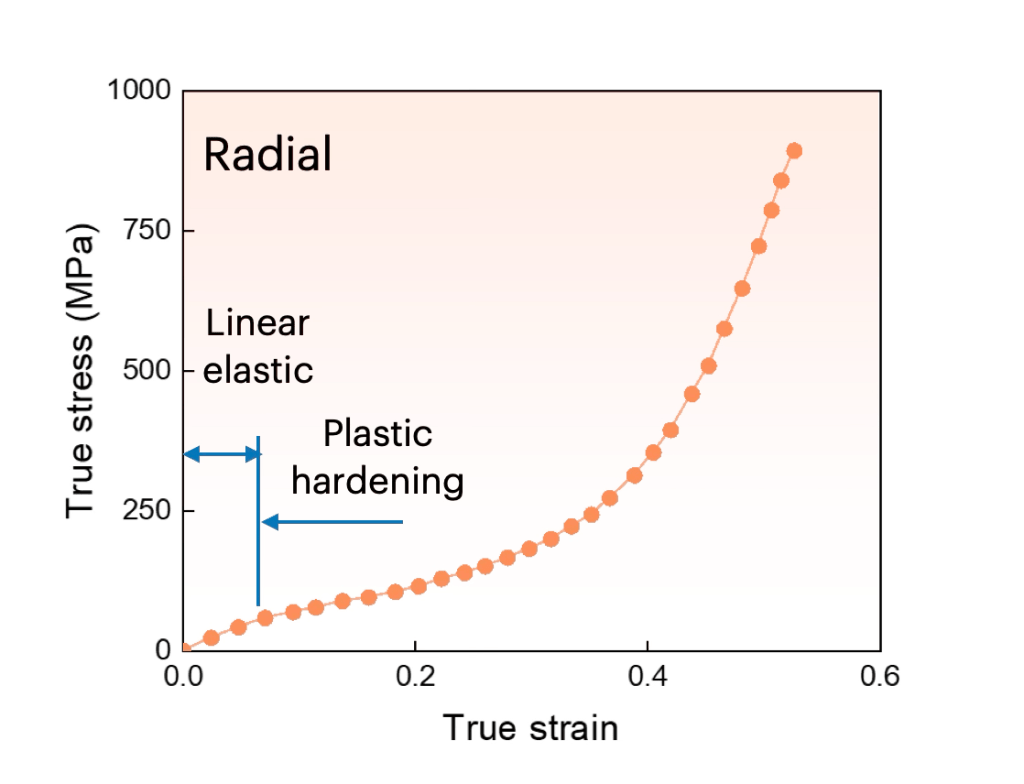
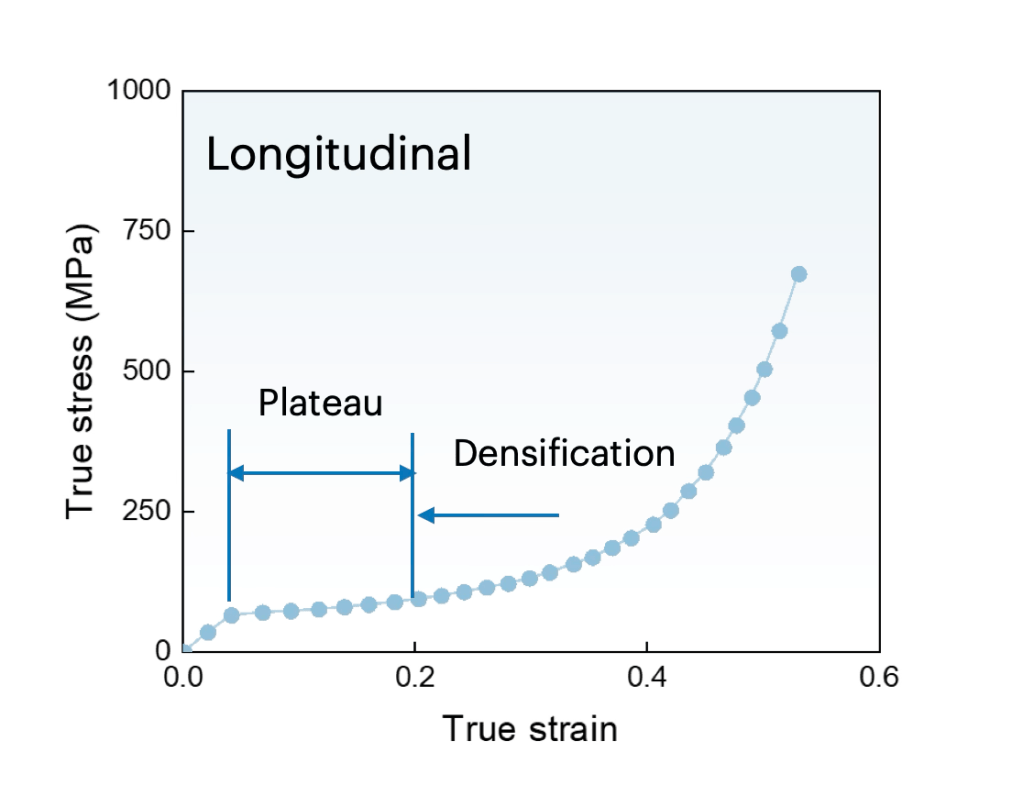
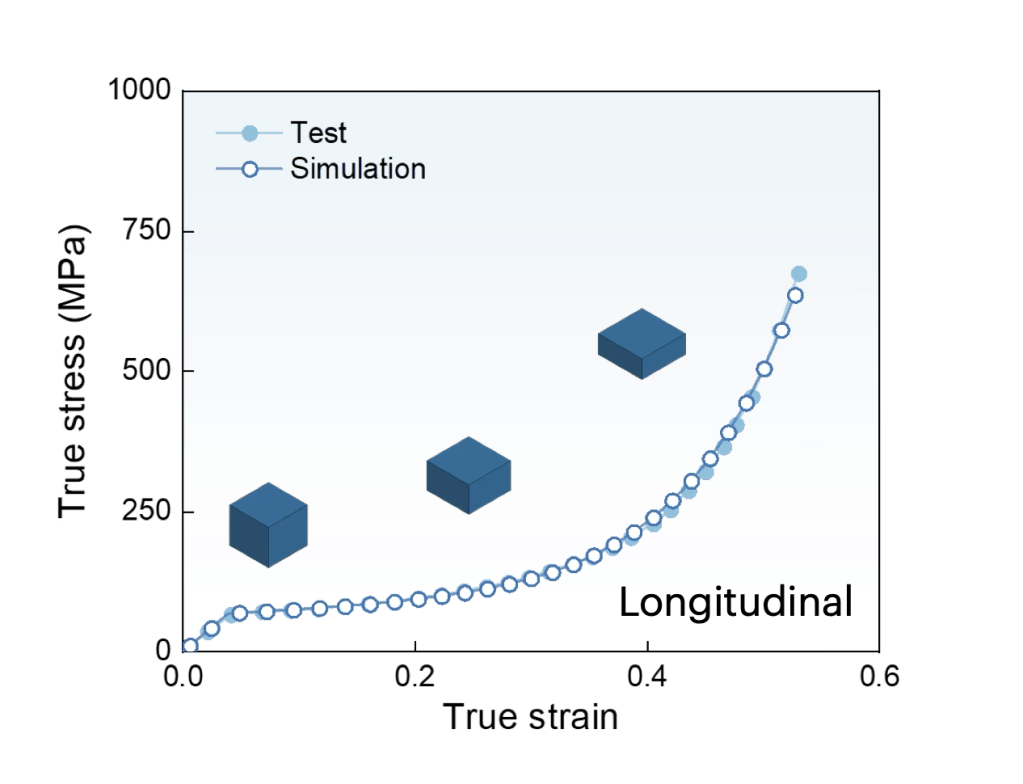
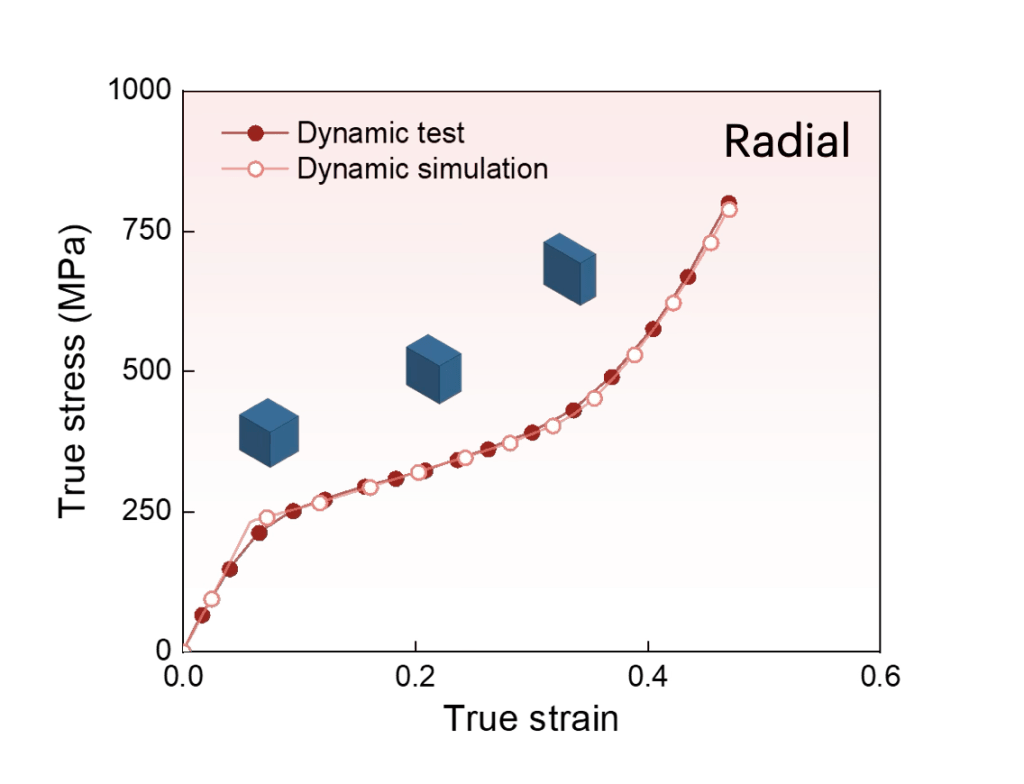
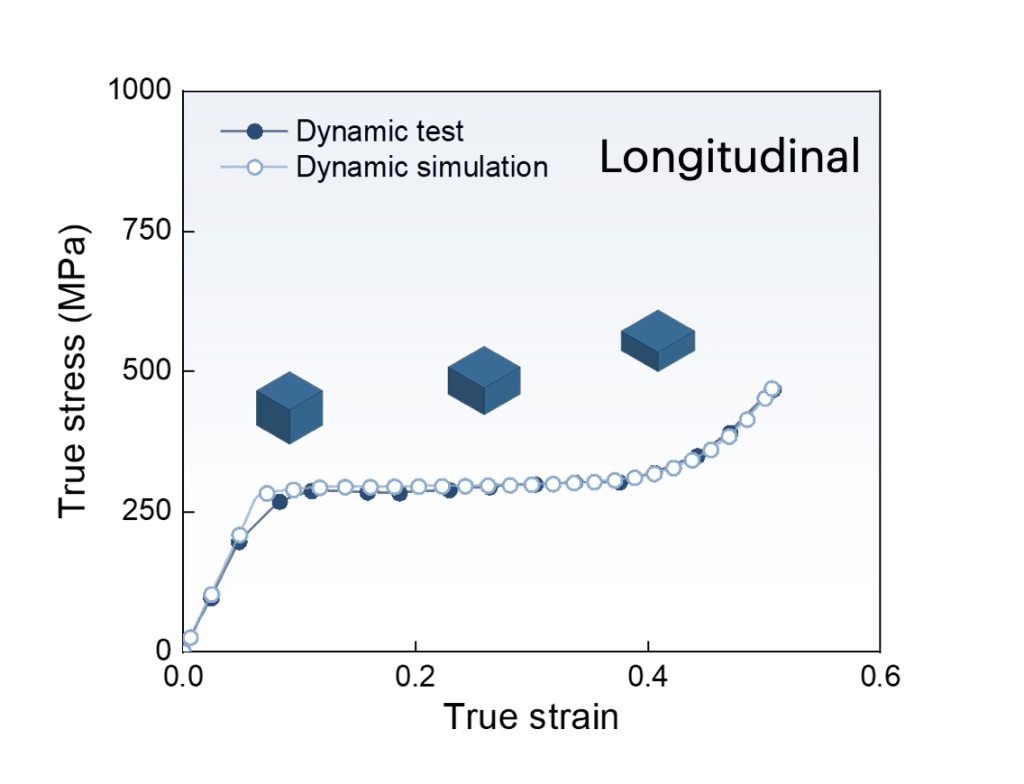
To determine anisotropic hardening tensor, the true stress-strain curves from two material primary directions (radial and longitudinal) from a cutted horn sample are shown as below:
User Defined Material Model Development
With material characterization completed using available coupon-level test data, the user-subroutine in LS-DYNA was used to develop horn material model. After finishing comprehensive theoretical derivation, the constitutive model was written using Fortran and was later compiled into main LS-DYNA solver.
Validation & Correlation
Coupon-level test boundary conditions were replicated and simulated in FEA with self developed material model to compare stress-strain behaviours between test and CAE. This model shows a very high correlation to the test data as shown below in both primary material directions.
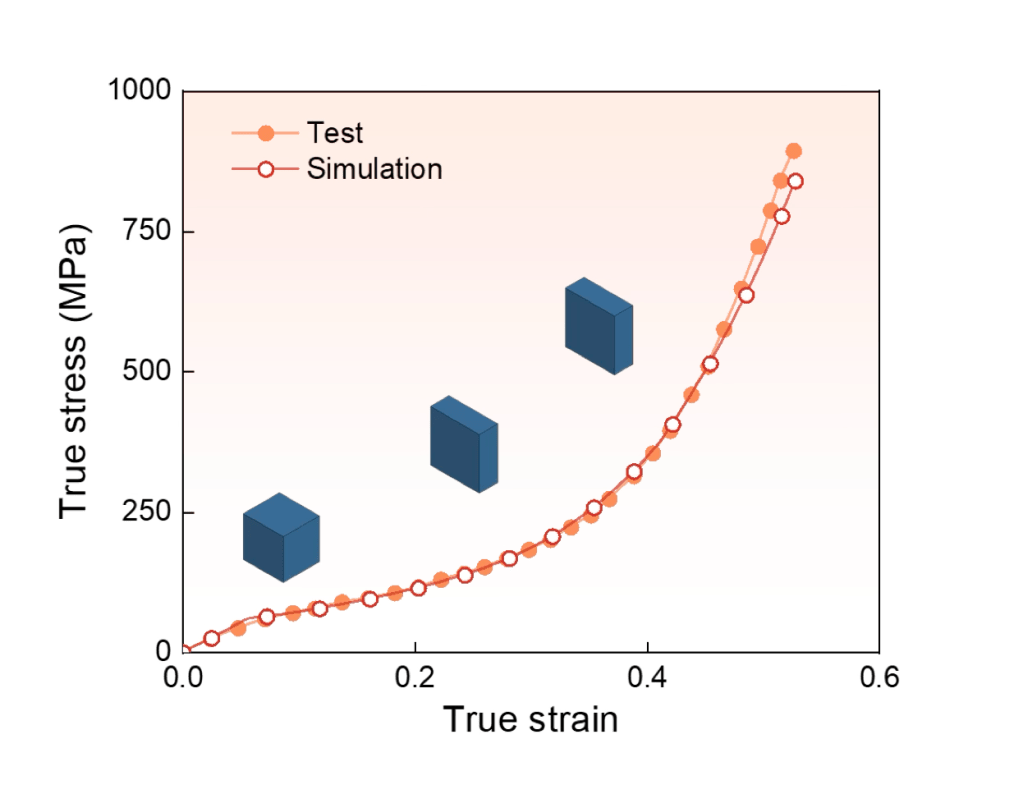
The constitutive model was also validated under strain-rate effect and achieve very high correlation to the dynamic test data.
Read More for Further Studies
A complete dissertation including detailed theoretical derivation, model implementation, and applications can be accessed using link below.
 Zheng Li
Leave a comment